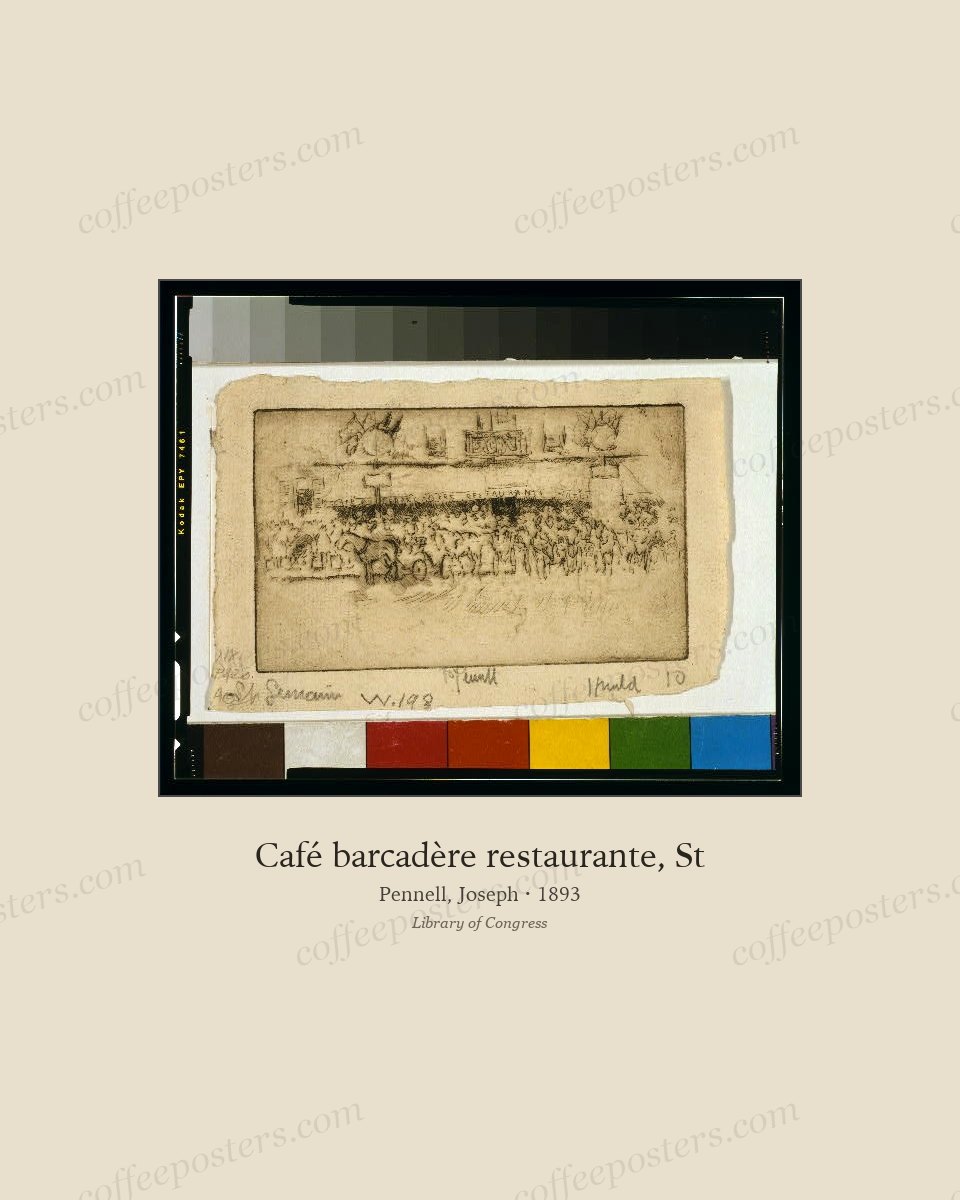
Twelve pieces make a complete café collection because they cover all four registers of the coffee image: style (Belle Époque posters), origin (botanical plate and plantation landscape), process (a roa
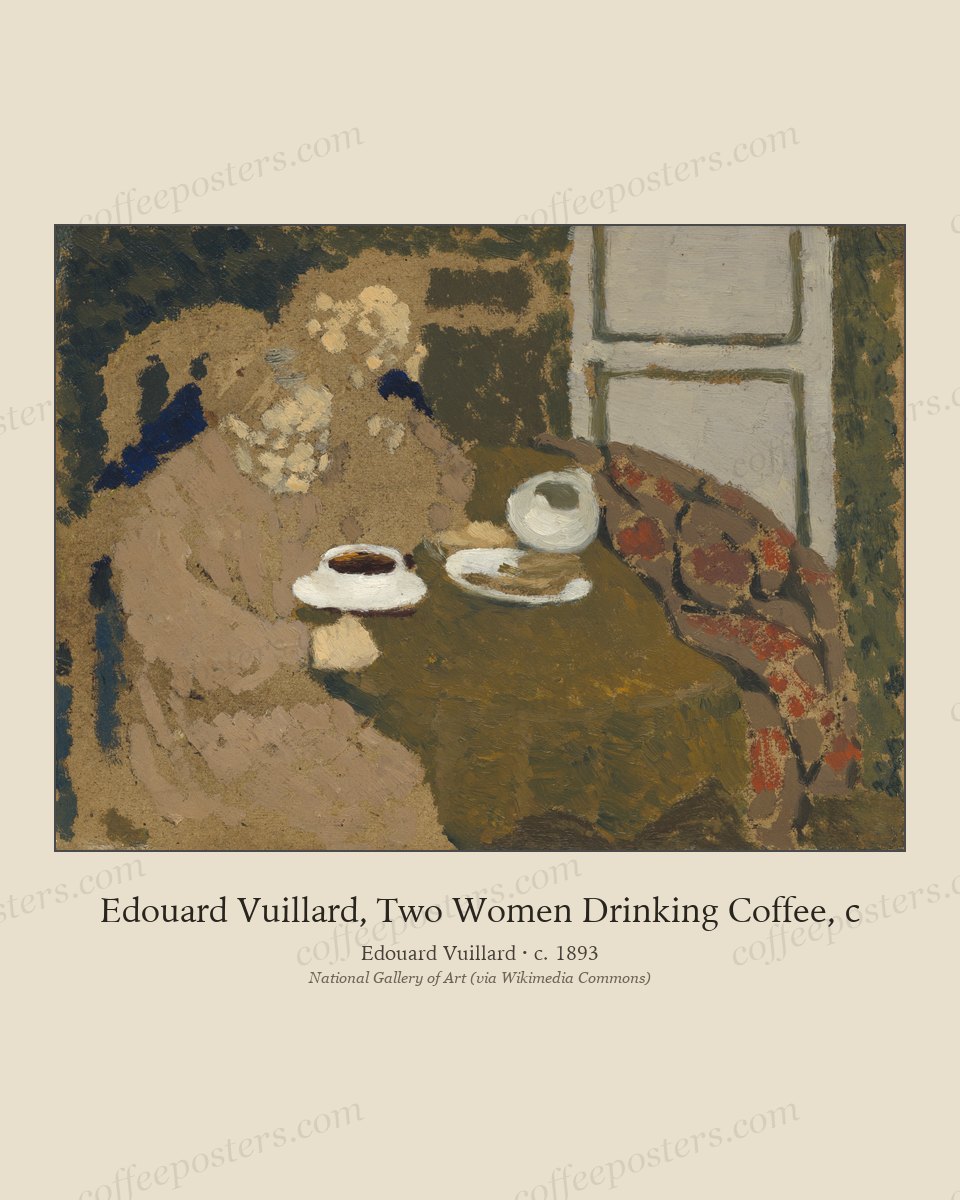
Coffee in 18th-century European salon painting
In 18th-century European painting coffee marks refinement and polite sociability: the porcelain cup, the small gueridón table, the elegant interior. Rococo painters used the coffee service as a prop o
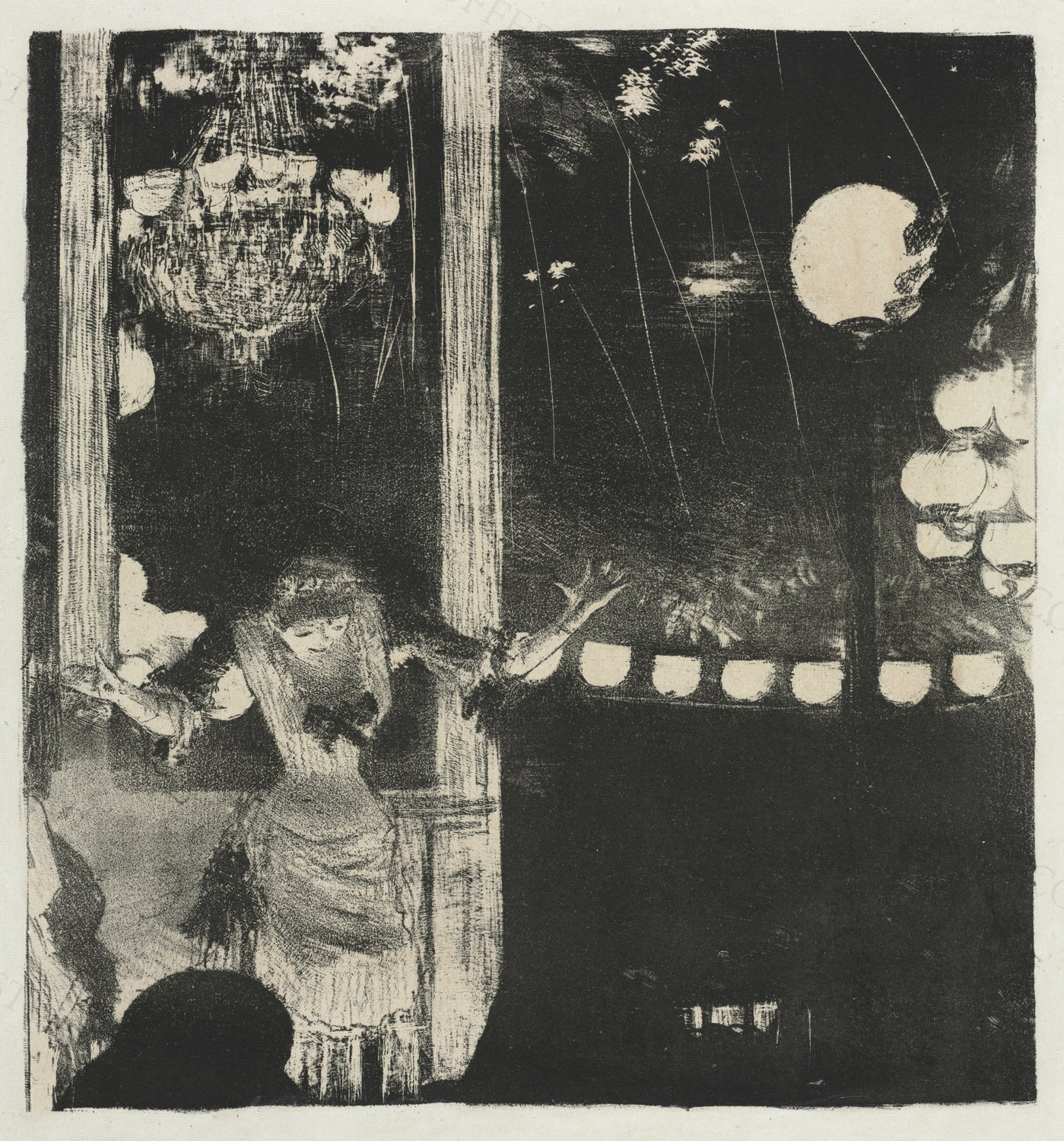
Restaurants vs. cafes: how the archive choice differs
Restaurants and cafés draw from the same archive differently. A café is coffee-forward with close seating, so it favours coffee posters and café-scene imagery, denser and hung low to a seated sightlin
6 Belle Époque coffee poster essentials
Six posters cover the essential range of Belle Époque coffee advertising: the canonical Brussels Rajah, its Meunier tea companion, a French café affiche, a chocolate-coffee crossover, an orientalist m

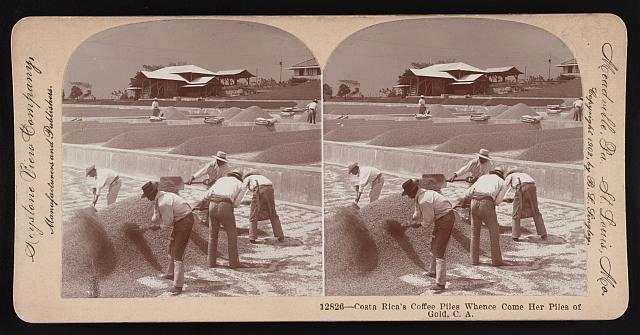
The roastery supply-chain wall: bean to cup in five pieces
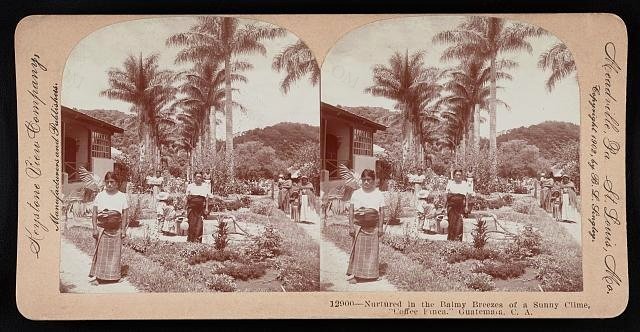
A roastery wall can tell the whole supply chain in five pieces: a botanical plate of the plant, a plantation landscape, a transport or trade image, a roasting scene, and a drinking scene. Sequenced le
10 most pinnable coffee posters in the archive
The most shareable coffee posters have three things in common: a strong single subject, a confident colour, and a composition that survives a thumbnail. On a platform where images are seen at the scal

What the commercial-display license actually covers
The commercial-display use of an archival coffee print covers printing the file and showing the framed result in a business you operate — a café, roastery, restaurant, or hotel. It does not grant resa
Women in coffee advertising, 1880–1914
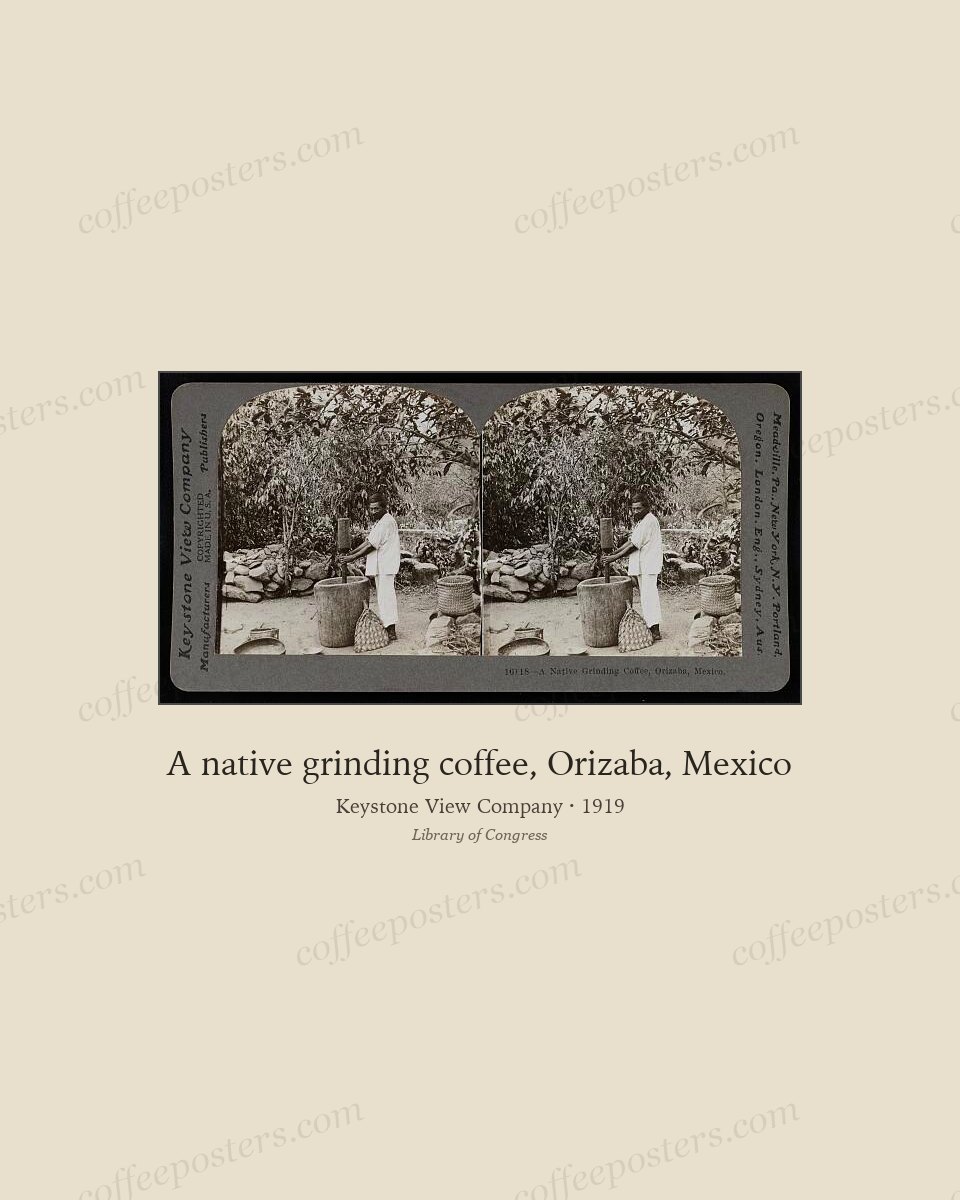
From roughly 1880 to 1914 the female figure was the default vehicle of coffee advertising: the idealised Art Nouveau woman served, poured, or personified the drink. The convention sold both café socia

Five cafe wall mistakes (and what to do instead)
Five mistakes ruin most café walls: hanging too high, mismatched frames, too many sizes, generic stock art, and poor lighting. Each has a cheap fix that is about discipline rather than budget, and cor
Forgotten Belle Époque coffee brands and their posters
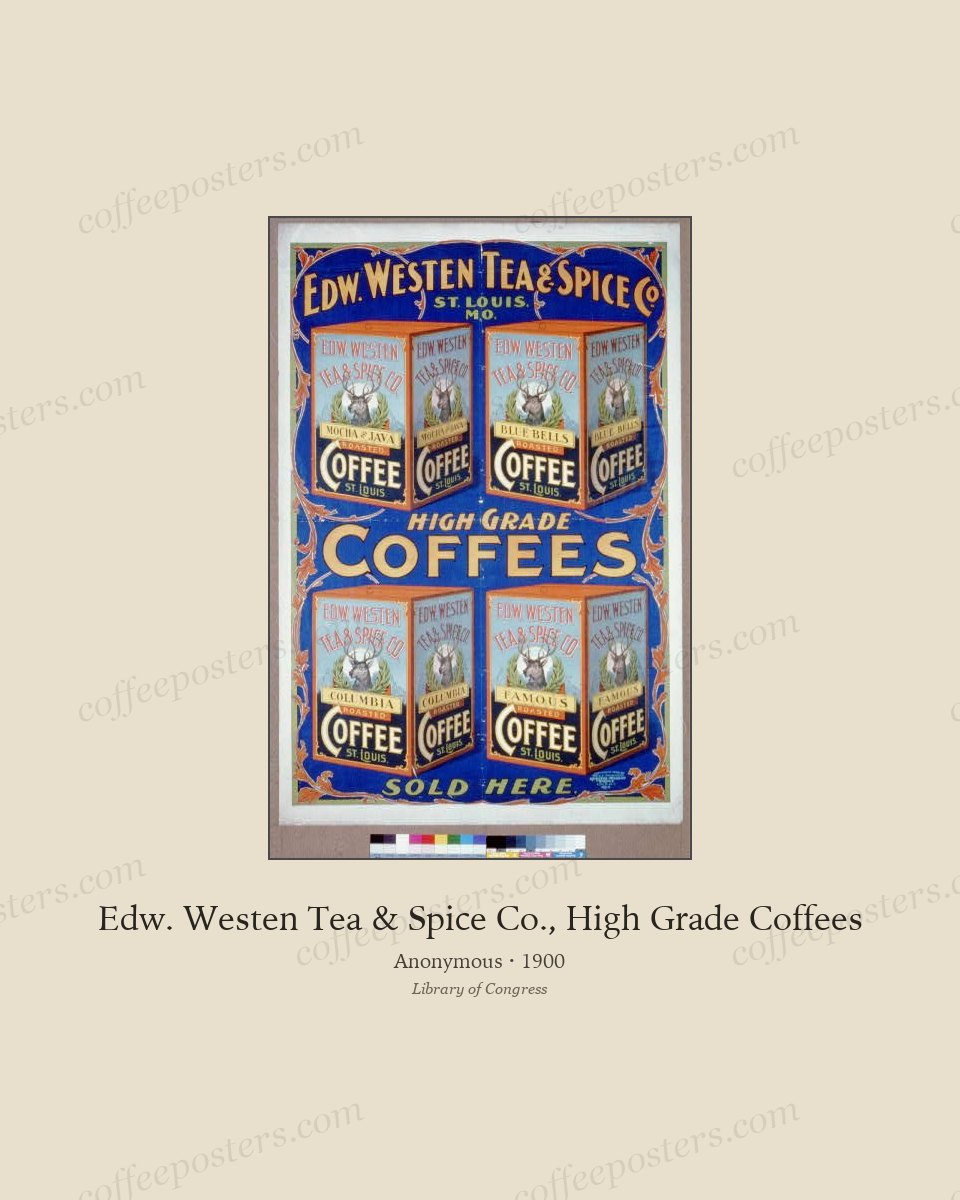
Most Belle Époque coffee brands are remembered, if at all, only by their posters. Small colonial-import houses across Belgium, France, and Germany — the Rajah house in Brussels, countless café-and-chi