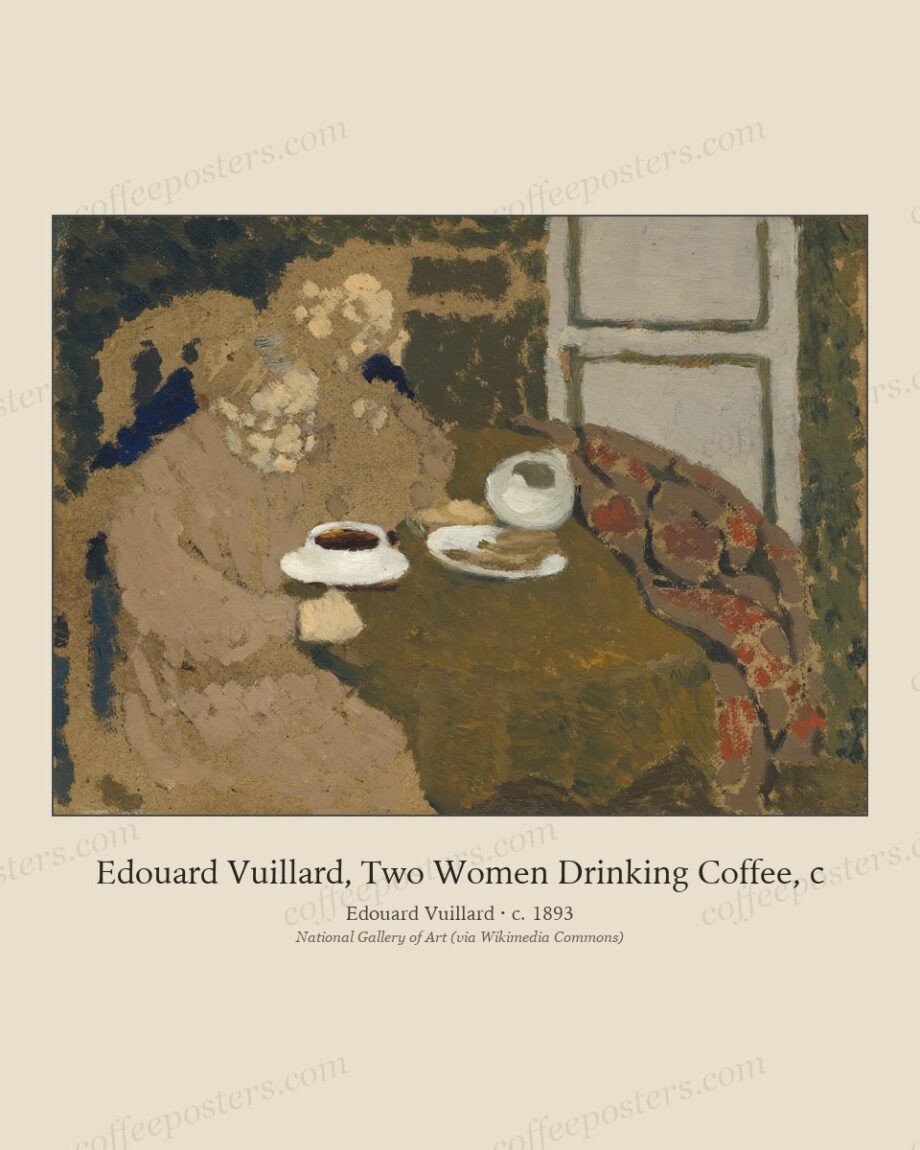
TL;DR — In 18th-century European painting coffee marks refinement and polite sociability: the porcelain cup, the small gueridón table, the elegant interior. Rococo painters used the coffee service as a prop of leisured status — and the century’s great novelty, porcelain itself, made the cup a luxury object — well before coffee reached the mass market of the following century.
By Coffee Posters · Published September 2026
Coffee as a sign of refinement
By the early 1700s coffee had moved from exotic curiosity to fashionable luxury in the courts and salons of Europe. It arrived alongside two other new hot drinks, tea and chocolate, and all three were expensive, foreign, and socially coded. Painters of the Rococo used the coffee service — fine porcelain, the small side table, the unhurried gesture — as shorthand for refinement, leisure, and polite sociability.
The setting is as important as the cup. These are interiors of the well-off: panelled rooms, silk, mirrors, the apparatus of a class with time to spend an afternoon in conversation. Coffee is the token that the sitters belong to that world.
Porcelain and the luxury of the cup
The 18th century is also the century of European porcelain. Meissen cracked the secret of hard-paste porcelain around 1710; Sèvres and others followed. Suddenly the vessel coffee was drunk from was itself a coveted luxury, and painters lavished attention on the cup, the saucer, the pot — the gleam of glaze, the painted decoration, the delicacy of the handle. In a salon painting the porcelain coffee service is a small still life of status embedded in the larger scene.
The intimate scale
Salon coffee scenes are small and domestic rather than public. They show two or three figures in conversation, a woman pouring, a cup passed — the drink as the occasion for an intimate social exchange. There is no café here, no commerce; the ritual is private and mannered, conducted among equals in a controlled interior. It is coffee as etiquette.
A different drink from the century that followed
This is coffee before the café poster, the plantation landscape, and the roasting engraving — before it became a branded commodity and a mass drink. In the 18th-century salon it is a marker of class and manners, painted for patrons who saw themselves in the refined interiors on the canvas. It is the earliest layer of the coffee image in European art, and understanding it clarifies everything the 19th century then did to democratise, commercialise, and finally advertise the same drink.
In the archive: view the featured piece.
Frequently asked questions
What did coffee mean in 18th-century painting?
Refinement, leisure, and polite sociability — the porcelain cup and elegant interior signalled class and manners, not commerce.
Why is porcelain important to these paintings?
European porcelain was perfected in the 18th century (Meissen c.1710, then Sèvres), making the coffee cup itself a coveted luxury that painters depicted with care.
How do salon coffee scenes differ from later coffee art?
They are small, domestic, and status-driven, predating the café poster and plantation landscape of the 19th century — coffee as etiquette rather than commodity.
Further reading
- Anker and the Swiss domestic coffee genre
- Coffee vs. tea and chocolate imagery
- The coffee cup as a motif across eras
Coffee Posters curates, restores, and reformats public-domain coffee visuals for archival-quality printing. Browse the archive · About.