TL;DR — Albert Anker (1831–1910), Switzerland’s best-loved genre painter, made coffee a recurring fixture of ordinary village life: the pot on the family table, the old man at the grinder, the grandmother sharing a cup. Painted with documentary honesty rather than sentiment, his coffee scenes are among the truest images of how the drink was actually lived with in 19th-century Europe — away from the café and the poster.
By Coffee Posters · Published June 2026
Who Anker was
Albert Anker was born in 1831 in Ins, a farming village in the canton of Bern. He trained in theology first, then turned to painting, studying in Paris under Charles Gleyre in the 1850s — the same studio that trained Monet, Renoir, and Sisley — and exhibiting at the Paris Salon. But unlike his Impressionist studio-mates he went home. He spent most of his life back in Ins, wintering in a studio there and painting the people around him: schoolchildren, grandmothers, farm labourers, the very old and the very young. He became, and remains, the national painter of Switzerland; he died in 1910.
What separates Anker from the sentimental genre painting of his era is restraint. He did not prettify. His rooms are plainly furnished, his faces are particular and often careworn rather than idealised, and the objects on the table are the real objects of a Bernese household. That documentary honesty is why his work matters to the history of coffee.
Coffee as a domestic fixture
In Anker’s interiors coffee is never the announced subject; it is the furniture of daily life, and it appears constantly. A coffee pot sits at the centre of a family meal. An old man works a hand grinder by a window, absorbed in the small task. A grandmother shares a cup with a grandchild. Coffee is simply there, the way it was there every morning in a real 19th-century home.
This matters because the dominant images of 19th-century coffee — the Belle Époque poster, the café-concert scene — show the drink as spectacle, commerce, and public pleasure. Anker shows the other ninety percent: coffee as the ordinary thing on the kitchen table, in a farmhouse far from any café, handled by people who are not performing.
The grinder and the ritual
The best-known single coffee image in this vein is Anker’s study of an old man with a coffee grinder (1886), which compresses the whole domestic ritual into one figure and one tool: the grinder held between the knees, the concentration, the patience. It is a portrait of a habit as much as a person, and it says more about how coffee was made and valued in a modest household than any advertisement could.
Honesty over sentiment
It would have been easy for Anker to sweeten these scenes into greeting-card nostalgia, and lesser painters of the period did exactly that. Anker’s discipline is that he mostly resists it. The coffee is a small daily comfort in lives that are otherwise plain and often hard, and he lets it be exactly that — neither romanticised nor pitied. That evenness of tone is what gives his work its lasting credibility.
Why the genre still reads well on a wall
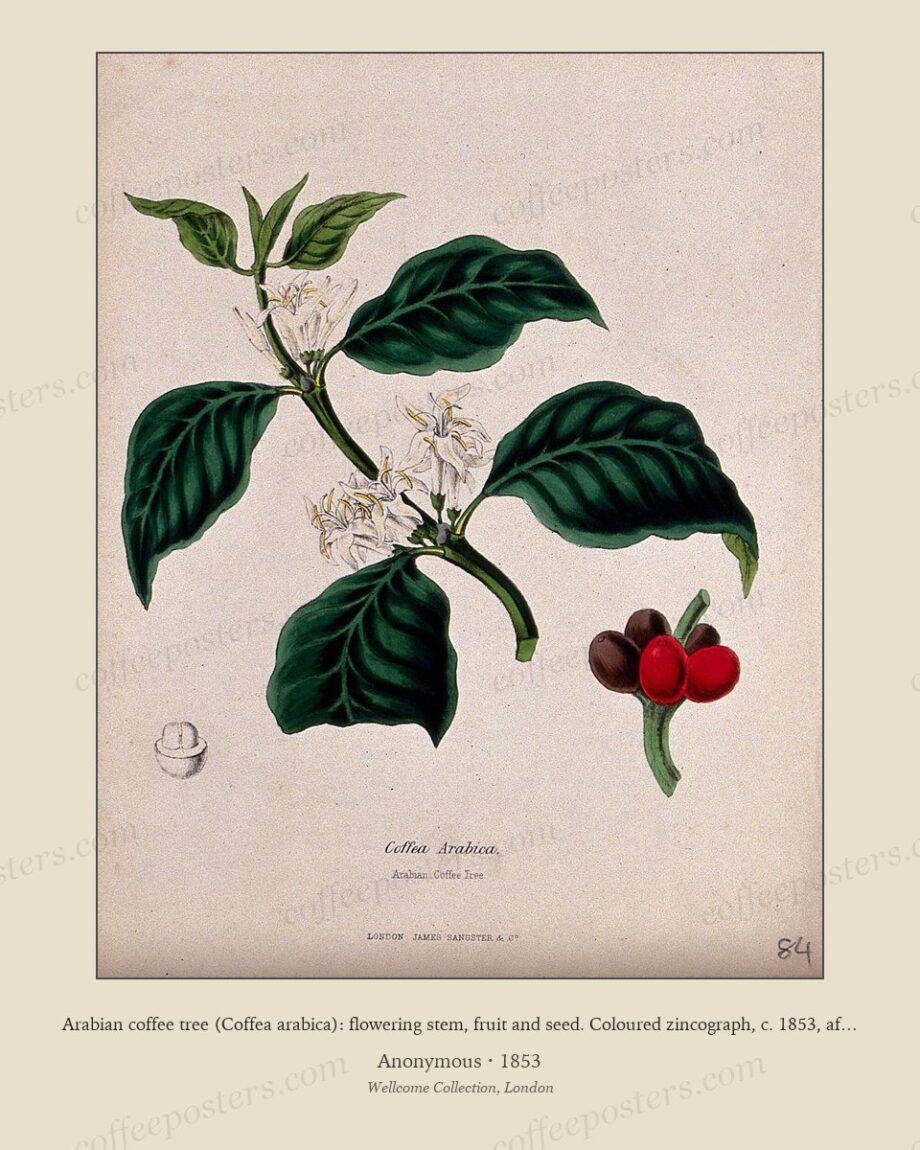
Anker’s coffee scenes work in a domestic setting today for the same reason they worked in 1880: they are calm, warm, and unpretentious, and they honour a ritual the room is already built around. In a kitchen or breakfast nook, hung near a botanical plate of the coffee plant or a plantation landscape, an Anker scene closes the loop — the plant, the place, and the table where it all finally arrives, in the hands of an ordinary person making an ordinary cup.
In the archive: Anker’s Old Man with Coffee Grinder, in the coffee-drinking category alongside other domestic scenes.
Frequently asked questions
Why is Albert Anker associated with coffee?
Coffee appears repeatedly in his domestic interiors as an ordinary household ritual — the pot, the grinder, the shared cup — painted with documentary honesty rather than sentiment.
Who was Albert Anker?
A Swiss genre painter (1831–1910), trained in Paris under Charles Gleyre, who spent his life painting village life in Ins, canton of Bern. He is regarded as the national painter of Switzerland.
How does Anker’s coffee differ from poster coffee?
The poster shows coffee as public spectacle and commerce; Anker shows it as private domestic ritual — the everyday cup in a farmhouse kitchen, handled by ordinary people.
Further reading
- Coffea arabica in botanical illustration
- The coffee cup as a motif across eras
- Coffee in 18th-century salon painting
Coffee Posters curates, restores, and reformats public-domain coffee visuals for archival-quality printing. Browse the archive · About.