![[Uncle Sam's coffee]](https://coffeeposters.com/wp-content/uploads/2026/06/CA-1754-1-920x1150.jpg)
A buyer paying $19 for a digital coffee print deserves a plain answer to one question: who actually owns what, and what can you do with the file? This is that answer for 2026, with the lines drawn clearly.
What ‘public domain’ means
A work in the public domain is one that no one holds copyright over. The author’s exclusive right to control reproduction has either expired (copyright durations vary by country and work type) or never existed in that jurisdiction, or has been voluntarily waived by the author.
For visual works in the United States as of 2026, the bright line is: any work first published before 1929 is in the US public domain. That’s an evergreen rule — in 2027 it shifts to pre-1930, in 2028 to pre-1931, and so on. Every January 1st a new year of material enters the US public domain.
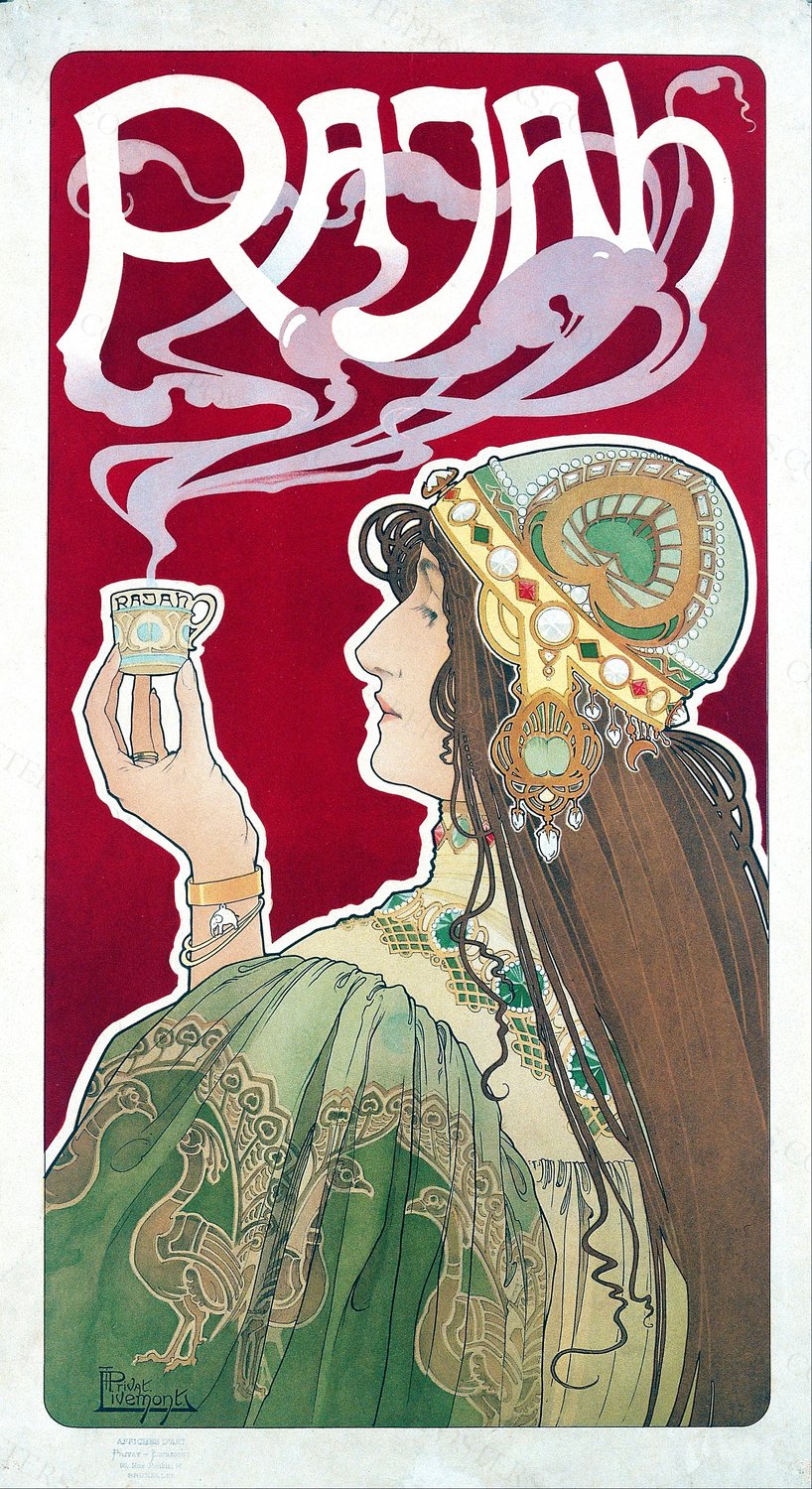
Most of the work in this archive falls comfortably inside this bright line: Belle Époque posters from 1895–1914, 19th-century botanical plates, mid-19th century travel lithographs, 17th–18th century salon paintings. The 1903 Ferrigno and the 1920 Norfini are both pre-1929 and therefore solidly public domain in the United States.
What ‘public domain’ does NOT mean
Public domain is not ‘free of any cost or labour to reproduce.’ The original work being public domain only means the AUTHOR’S copyright has expired or never existed. The institution that holds the physical copy can still:
- Charge for high-resolution scans (digital reproductions can carry their own thin copyright in some jurisdictions, though US case law since Bridgeman Art Library v. Corel has limited this).
- Charge for restoration work — cleaning age artefacts, repairing damage, colour-correcting to original condition. This labour is real and copyrightable in some forms.
- Restrict reproduction of the SCAN even though the underlying work is PD, by claiming a thin separate copyright in the digitised file.
What this means in practice: a Belle Époque coffee poster from 1899 is in the US public domain. The 4000-pixel scan of that poster made by the Wellcome Collection in 2017 is also (now mostly) public-domain in practice because Wellcome has released it under CC BY 4.0 or CC0 voluntarily. But if a private collector held the same poster and refused to share their high-resolution scan, the underlying work would still be PD and a separate institutional scan would be required.
What we add to the public-domain original
Four things, all on the labour side, none on the copyright side of the original work:
- Curatorial selection. Choosing which 1,000 pieces out of an estimated 50,000+ available coffee-related public-domain images belong in this archive. This is editorial work; it doesn’t generate a new copyright but it generates a different product than a raw institutional dump.
- Restoration. Each piece is cleaned of age artefacts (foxing, water stains, scan moiré, edge damage) without inventing material that wasn’t on the original. The restored file is a different file than the institutional scan.
- Print preparation. The original scan is sized into three standard print sizes (8×10, 11×14, 16×20 inches at 300 DPI), with the print-bleed and margin calibrated for the piece’s source resolution.
- Editorial framing. The product page describes the piece, names the artist, dates the work, identifies the source institution, and adds historical context. This is original writing.
What the buyer’s license covers
When you buy a piece from this archive, you get:
- Personal display use. Print and hang anywhere in your home. No limits on quantity or duration.
- Commercial single-location display use. Print and hang in a cafe, restaurant, hotel, shop, or office. No additional fee per location.
- Re-prints of the file you bought, in any size. Lost the print, want a bigger one? Re-print as many times as you want from the file.
What you don’t get:
- Right to resell the digital file. The file itself can’t be redistributed. Buying once and uploading the file elsewhere for free distribution violates the license.
- Right to claim authorship. You can’t put your name on the work or pretend you designed it.
- Right to alter the work and pass off the altered version as the original. Edit for your own use, fine; reproduce the edited version commercially, not fine.
- Multi-location commercial use under a single $19 purchase. Chain restaurants, multi-property hotel groups, and large institutional buyers should contact us for an enterprise license. Single $19 covers one location.
Why this license shape
The underlying work is public domain. We could theoretically charge nothing and let anyone download. We charge $19 because the curatorial, restoration, print-preparation, and editorial labour is real, ongoing, and not zero-cost. The license is calibrated to that labour: pay once, use as you would use any photograph or print you own — just don’t redistribute the digital file or pretend you made it.
If your use case doesn’t fit one of these patterns — you’re a publisher wanting to license for a book, a museum doing an exhibition, a hospitality chain with 40+ locations — email hello@coffeeposters.com with your specific case and we’ll figure it out.
Related
Related reading and browsing
- Licensing — what rights buyers receive with Coffee Posters downloads